

Educational content for students. Not medical or coding advice. Having symptoms? See the patient guide.
Call your local emergency number if you are soaking through a pad or tampon every hour for more than 2 hours in a row and also feel lightheaded, dizzy, short of breath, or have chest pain [ACOG]. Get urgent help if you might be pregnant and have bleeding with pain in your tummy or pelvis, as this can be a sign of ectopic pregnancy [NHS].
"Metrorrhagia" is the medical term for bleeding or spotting between periods. It's common and often not serious, but the NHS says to always get it checked by a doctor [NHS], and ACOG lists bleeding between periods as a form of abnormal uterine bleeding to discuss with an ob-gyn [ACOG].
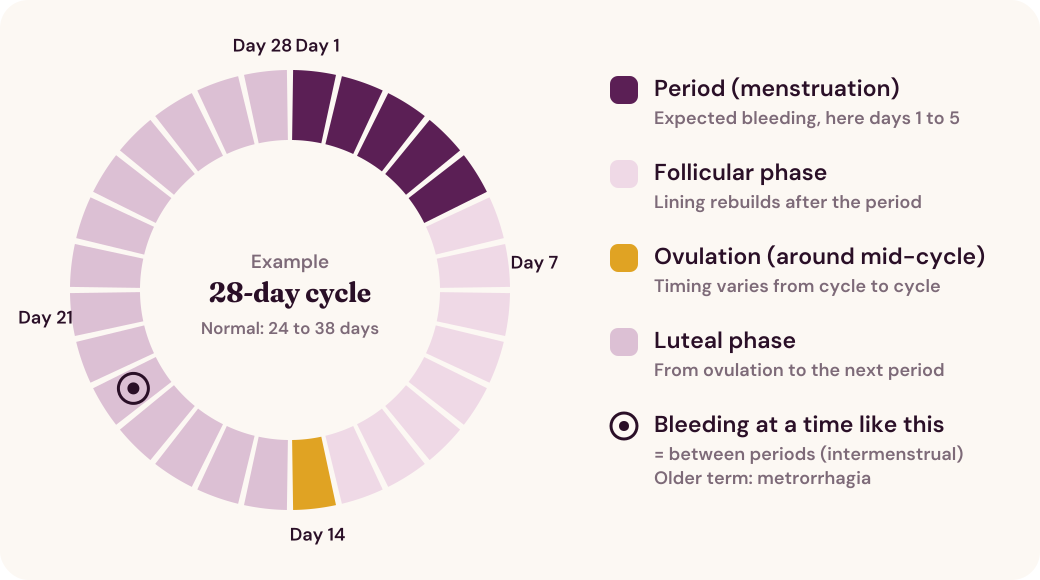
Common causes
- Hormonal contraception, such as the pill, implant, injection or hormonal IUD. Spotting is especially common in the first months [NHS] [ACOG]. See birth control.
- Polyps or fibroids, which are usually noncancerous growths in or around the womb [NHS].
- Infections, including STIs such as chlamydia [NHS].
- Hormone changes in the first years of periods and in perimenopause, or with conditions like PCOS and thyroid disease [ACOG]. See perimenopause.
- Pregnancy-related bleeding, including early pregnancy, miscarriage and ectopic pregnancy [ACOG].
- Medicines such as blood thinners [ACOG].
Less often, bleeding between periods can be a sign of cancer, which is why it should always be checked [NHS].

What happens at an appointment
Expect questions about your cycle and history, and possibly a pregnancy test, blood tests, STI tests and an examination of the vagina and cervix. You may be referred for an ultrasound, colposcopy or hysteroscopy [NHS] [ACOG]. ACOG suggests tracking the dates and amount of bleeding for several weeks before your visit [ACOG]. Our private spotting log can help.
In this guide
 Next stepsWhen to see a doctorUrgent signs vs a routine appointment.
 ContraceptionOn the pill, implant or IUDWhy breakthrough bleeding happens.
 Life stageIn perimenopauseWhat changes and what still needs checking.
 ToolSpotting logTrack bleeding privately on your device.
Sources
- Abnormal Uterine Bleeding (FAQ095) American College of Obstetricians and Gynecologists, reviewed Aug 2025
- Vaginal bleeding between periods or after sex NHS, reviewed Aug 2024
We link to primary medical sources so you can check our work. See the editorial policy and the full reference list.